

Typology
Article
Scopes
Culture
“Letting go of what no longer serves them and making space for regeneration. ”
Module IV of the Social Biomimicry course, led by Toby Herzlich and Gina LaMotte of the Biomimicry for Social Innovation team, came to an end and I find myself reflecting on key themes of resilience. This module offered a profound exploration into the application of nature’s principles to social systems. Through their combined expertise in leadership, systems change, education, and environmental justice, Toby and Gina invited us to reimagine how we design human systems that are just, regenerative, and resilient, mirroring the wisdom of living systems.
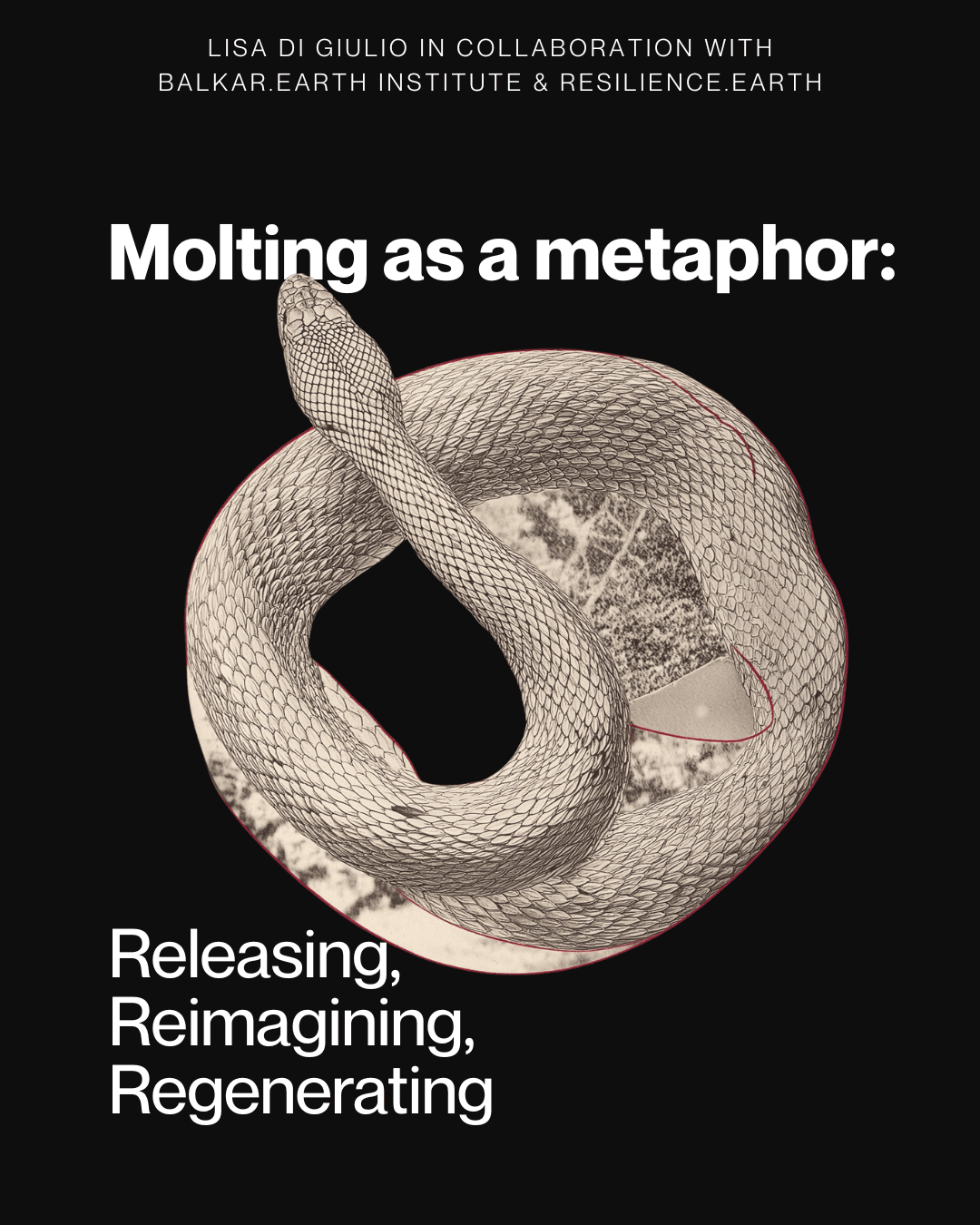
One concept in particular stayed with me and I kept thinking about it throughout the weeks: “molting”, the shedding or casting off of an outer layer or covering and the formation of its replacement. Probably it resonated with the phase of life I am in, the end of a cycle, finalizing my Master’s and about to move away from places and people I called home for the last two years. But besides an inner molting, it resonated with thoughts about society, about renewal and transformative change.
In nature, molting is a process of release and renewal - an animal sheds old skin, feathers, or exoskeletons in response to growth or environmental pressures. Plants drop leaves or bark to protect themselves or adapt to shifting seasons. This elegant, often cyclical process is not just a physical transformation but a survival strategy rooted in resilience. Within the framework of social biomimicry, molting offers a profound metaphor for how individuals and systems can evolve - by letting go of what no longer serves them and making space for regeneration.
The adaptive cycle and panarchy
Living systems teach us that change is not only inevitable but essential. The adaptive cycle and panarchy theory remind us that systems must sometimes break down or release old structures to reorganize and emerge stronger.
The adaptive cycle is a model inspired by how ecosystems change over time. It helps us understand that systems—whether ecological or social—don’t just grow and stabilize; they also go through phases of breakdown and renewal. Traditionally, scientists focused mostly on how systems grow and conserve resources. But to fully understand change, we also need to look at moments of release (when things fall apart) and reorganization (when new possibilities emerge). The adaptive cycle has four key phases: growth (r), conservation (K), release (Ω), and reorganization (α). The first part of the cycle, called the foreloop, is slow and steady, where systems accumulate energy, resources, or knowledge. The second part, the backloop, is faster and more unpredictable, where systems break down and reset, opening the door for innovation and renewal.
These cycles don’t happen in isolation. They are nested within larger systems, like layers in a hierarchy—what scientists call panarchy. This structure helps explain how small, fast changes can happen within larger, more stable systems without causing total collapse. For example, in a society, quick shifts in local communities or organizations can lead to creative solutions, while larger institutions provide stability and memory that support recovery and long-term growth. Whether we’re looking at forests, economies, or social networks, the adaptive cycle offers a valuable way to understand the rhythm of change, resilience, and regeneration.
Collective molting
In human terms, this may mean releasing outdated beliefs, patterns of behavior, roles, or institutional frameworks. Yet, just like in nature, the shedding phase - though necessary - can be vulnerable and disorienting. This is where biomimicry invites us to observe and emulate how other species navigate transformation collectively. Take, for instance, the vacancy chain of hermit crabs (I really loved this example!). As one crab finds a new, larger shell, it triggers a cascade, each crab waiting for the right moment to move into a more suitable home. This chain reaction reflects not only a biological need but a deep interdependence and shared vulnerability. It is a collective form of molting - each participant relying on the timing and readiness of others. This reminds us that transformation does not need to be solitary. In fact, large-scale social change often happens most effectively when people or organizations coordinate their efforts, allowing each other the space and safety to grow.
The concept of mutualism in nature further reinforces this principle. Species like the oxpecker and large mammals engage in reciprocal relationships that enhance the health of both. Similarly, in moments of transition (whether personal, organizational, or societal) we thrive through collaboration, not competition. Resilience in this context is not simply bouncing back; it is about adaptability, diversity, and the capacity for collective reorganization. Ultimately, molting is an act of courage. It is the willingness to release the old to make space for the new, to trust in cycles of change, and to embrace the unknown not as a threat but as an opportunity. In a time of deep ecological and social challenges, may we learn from nature’s wisdom, lean into our collective molting, and emerge not only changed, but more connected, resilient, and alive.
Being aware of Change
Growth doesn’t stop once the old layer is shed. Insects, for example, must stretch and expand their new exoskeletons to make room for future development. Similarly, as we adopt fresh ways of thinking and responding to our shifting world, we must continue to widen our perspectives and remain open to evolving possibilities. This ongoing expansion supports resilience and adaptability in the face of constant change. Molting is rarely quick or easy - it can take hours, days, or even years, depending on the depth of transformation. The real power lies in recognizing the awareness that comes with change, and in choosing to engage with it. As we step into new ways of being, it's vital to honor the process and welcome the growth it makes possible.
I will leave you with a question Gina posed during a session, What have you outgrown and are ready to shed to allow the next version of your impact to emerge?
"A collective form of molting - each participant relying on the timing and readiness of others. This reminds us that transformation does not need to be solitary. In fact, large-scale social change often happens most effectively when people or organizations coordinate their efforts, allowing each other the space and safety to grow."